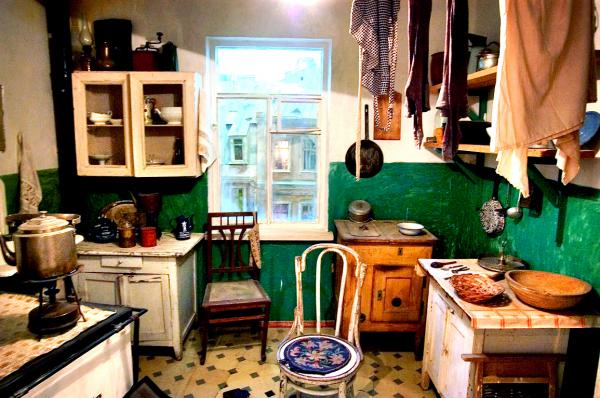
When Nikita Khrushchev emerged as the leader of the Soviet Union after Stalin’s death in 1953, one of the first things he addressed was the housing shortage and the need for more food. At the time, thousands of people were living in cramped communal apartments, sharing one kitchen and one bathroom with sometimes up to 20 other families. They were called khrushchevkas — five-story buildings made of prefabricated concrete panels. «They were horribly built; you could hear your neighbor,» says Edward Shenderovich, an entrepreneur and Russian poet. The apartments had small toilets, very low ceilings and very small kitchens. The individual kitchens in these tiny apartments, which were approximately 300 to 500 square feet, became hot spots of culture. Music was played, poetry was recited, underground tapes were exchanged, forbidden art and literature circulated, politics was debated and deep friendships were forged. «One of the reasons why kitchen culture developed in Russia is because there were no places to meet,» says Shenderovich. «You couldn’t have political discussions in public, at your workplace. You couldn’t go to cafes — they were state-owned. The kitchen became the place where Russian culture kept living, untouched by the regime.»… READ MORE