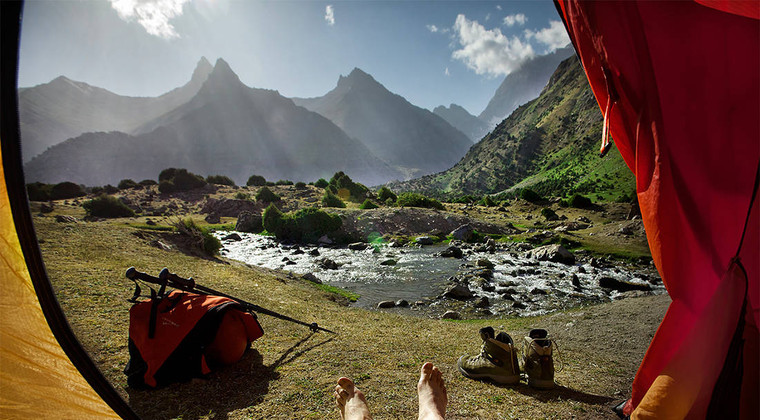
Bo White has done a lot of treks. Between a career in international development and a love for climbing and hiking, the 32-year-old has been all over the world. But nowhere quite like the Pamir. The Pamir is pristine because it’s remote — far from airports, cities and reliable roads. It’s so far from the sea that it’s technically the most landlocked inhabited place in the world, which, without transportation and opportunity, also leads to poverty. Of the 220,000 people living in the region, many live in poverty and a quarter live on less than $2 U.S. a day. Many survive on subsistence agriculture. So how do you bring poverty relief to one of the most remote places on earth? For some Pamiri locals and American entrepreneurs, the answer is attracting more people like Bo White.
Read full original article Can Tourism End Poverty in the Most Remote Place in the World? at deseret.com
Photo credit: Oleg Grigoryev