
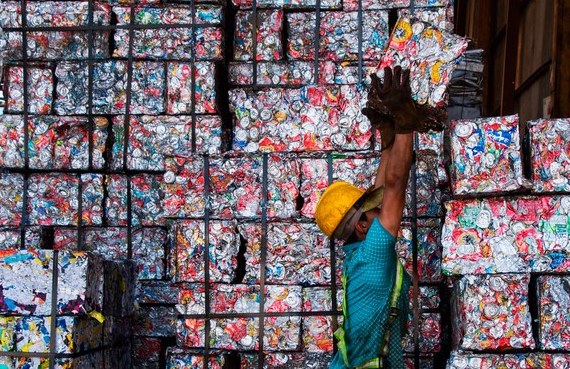
It has been a year since China jammed the works of recycling programs around the world by essentially shutting downwhat had been the industry’s biggest market. China’s National Sword policy, enacted in January 2018, banned the import of most plastics and other materials headed for that nation’s recycling processors, which had handled nearly half of the world’s recyclable waste for the past quarter century. The move was an effort to halt a deluge of soiled and contaminated materials that was overwhelming Chinese processing facilities and leaving the country with yet another environmental problem—and this one not of its own making.
In the year since, China’s plastic imports have plummeted by 99 percent, leading to a major global shift in where and how materials tossed in the recycling bin are being processed. While the glut of plastics is the main concern, China’s imports of mixed paper have also dropped by a third. Recycled aluminum and glass are less affected by the ban.
Globally, more plastics are now ending up in landfills, incinerators, or likely littering the environment as rising costs to haul away recyclable materials increasingly render the practice unprofitable. In England, more than half a million more tons of plastics and other household garbage were burned last year. Australia’s recycling industry is facing a crisis as the country struggles to handle the 1.3 million-ton stockpile of recyclable waste it had previously shipped to China.
Read full article at www.wired.com