
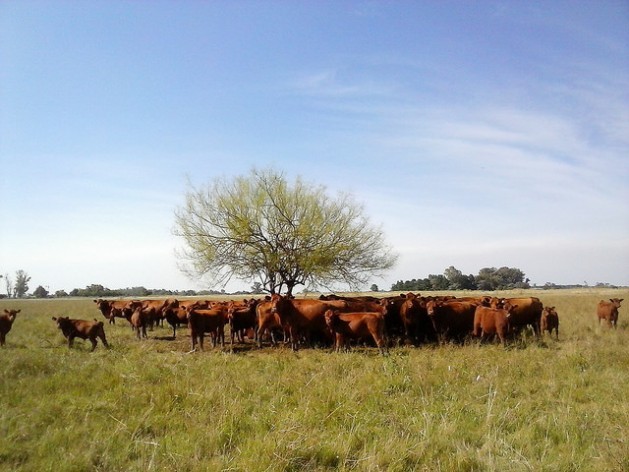
Stockbreeding generates enormous profits in Latin America, but it also has a broad and varied impact on the environment, which means it must urgently be turned into a sustainable, green-friendly, socially accepted and profitable activity. “Latin America cannot continue to ignore, from a public policy point of view, the challenge of making stockbreeding sustainable,” biologist Javier Simonetti, from the Department of Environmental Sciences in the University of Chile, told IPS. He added that stockbreeding has different costs for the region, “but they can be solved, they can be reduced through mitigation measures…I’m reasonably optimistic.” Latin America’s stockbreeding sector is strategic for food security, in the region and the world. According to figures from the United Nations Food and Agriculture Organisation (FAO), 25 percent of the calories and 15 percent of the protein consumed by Latin Americans are of animal origin.
Livestock contributes 46 percent of the region’s agricultural GDP, and is largely concentrated in just five countries, which account for 75 percent of production: Brazil, Uruguay, Paraguay, Mexico and Argentina, in that order. Approximately 80 percent of the region’s livestock producers are small family farmers involved in extensive traditional stockbreeding. However, the growing demand for products of animal origin has had a major environmental impact, which could be aggravated if forecasts of a 70 percent rise in global demand by 2050 are borne out.
Because of this, the experts say, decisive action must be taken so that growth in livestock production occurs in an environmentally sustainable manner that contributes, at the same time, to mitigating climate change, combating poverty, and improving human health. That´s why support policies are needed, as well as institutional frameworks and incentives, and more proactive governance to boost their integration and avoid marginalisation.