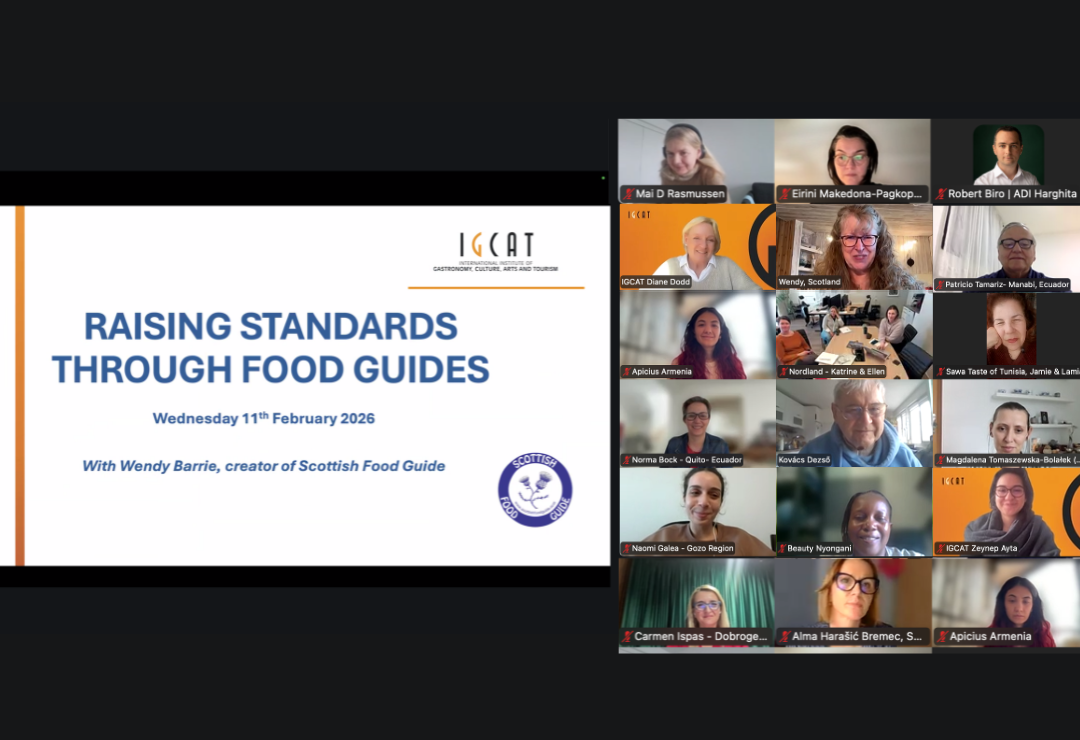
Drawing on her experience establishing the award-winning Scottish Food Guide in 2002, Wendy Barrie, cook, food writer, and IGCAT Expert, shared practical insights on creating a credible and enduring food guide, in the recent IGCAT webinar: Raising Standards through Food Guides. She emphasised that a successful guide goes far beyond listing restaurants or producers, it must uphold high standards, ethical practices, and a deep understanding of local food culture. Participants explored how to set clear goals, carefully select members, and design a guide that is user-friendly, dynamic, and truly reflective of the region’s identity.
The Scottish Food Guide’s Charter serves as a concrete example: it promotes seasonal menus, prioritises local produce, encourages ethical and sustainable practices, and values artisanal craft and collaborations with micro-businesses. Wendy stressed that quality always takes precedence over quantity, and that maintaining consistency and reliability is key to building trust with both producers and the public.
The discussion highlighted the importance of personal engagement, collaboration, and community-building. Wendy explained that guides thrive when they harness passion and knowledge, creating connections among like-minded food enthusiasts, chefs, and producers. Examples from Scotland, such as “Tattie Trips” to potato farms, demonstrated how guides can nurture local businesses, preserve heritage, and offer authentic experiences to visitors.
The webinar also offered an engaging dialogue around common challenges and the practical realities of creating and sustaining a food guide. Wendy shared her experience, such as avoiding short-lived initiatives, maintaining consistent standards, and ensuring the guide remains authentic rather than overly corporate. She emphasised the value of on-the-ground expertise, ongoing nurturing, and clear, fair criteria to uphold credibility and long-term success.
Participants from around the world joined the conversation, drawing on Wendy’s insights to explore a variety of themes. Patricio Tamariz (Manabí, World Region of Gastronomy 2026) reflected on how food guides can support the travel sector, while Naomi Galea (Gozo European Region of Gastronomy 2026) discussed balancing inclusivity with high-quality standards. Beauty Ngyony (IGCAT Expert, Zambia) explored ethical frameworks for emerging guides, and Carmen Ispas (Dobrogea candidate European Region of Gastronomy 2029) considered membership models and accessibility for small businesses and regional stakeholders. Wendy provided practical guidance throughout, sharing how different approaches can foster engagement, preserve integrity, and strengthen regional food cultures.
IGCAT extends its sincere thanks to Wendy Barrie and all participants who contributed to this inspiring and forward-thinking dialogue. Together, we continue working towards a future where food guides are more than directories – they are active tools for celebrating, preserving, and raising the profile of regional food heritage.
About the World/European Regions of Gastronomy
World Regions of Gastronomy, and European Regions of Gastronomy, guided by IGCAT, are working together to strengthen food security through the celebration of distinctive food cultures; create employment by stimulating creativity and gastronomic innovation; nourish children and adults through culinary and cultural education; driving environmental sustainability in tourism, hospitality and agricultural sectors; supporting balance and sustainable tourism practices; highlighting and supporting expertise from within rural and urban communities, creating connections and sharing good practices; and contributing to community health and well-being.
About IGCAT
International Institute of Gastronomy, Culture, Arts and Tourism (IGCAT) aims to empower local communities by raising awareness of the importance of protecting and promoting distinct regional food, culture, arts and natural assets as part of sustainable and balanced tourism and development strategies. This is essential to safeguarding our planet, health, wellness and local economies.
IGCAT is a non-profit institute established in 2012, working with regional stakeholder consortiums in the fields of gastronomy, culture, arts and tourism. It counts on the expertise of a worldwide network of experts and works in partnership with specialised intergovernmental organisations.
IGCAT founded the World/European Region of Gastronomy Award and is the official secretariat for the World Regions of Gastronomy and European Regions of Gastronomy Platforms. Furthermore, the Institute has developed the European Young Chef Award, the World Food Gift Challenge, the Top Foodie Websites and the international Food Film Menu.